Vibration Sensors
What Is Predictive Maintenance?
Why Is Predictive Maintenance Important?
Real-Time
Machine Detection.
Prevent
Unexpected Downtime.
Extend the Lifespan
Of Machinery.
Reduce the Cost
Of Emergency Repairs.
What Is a Vibration Sensor?
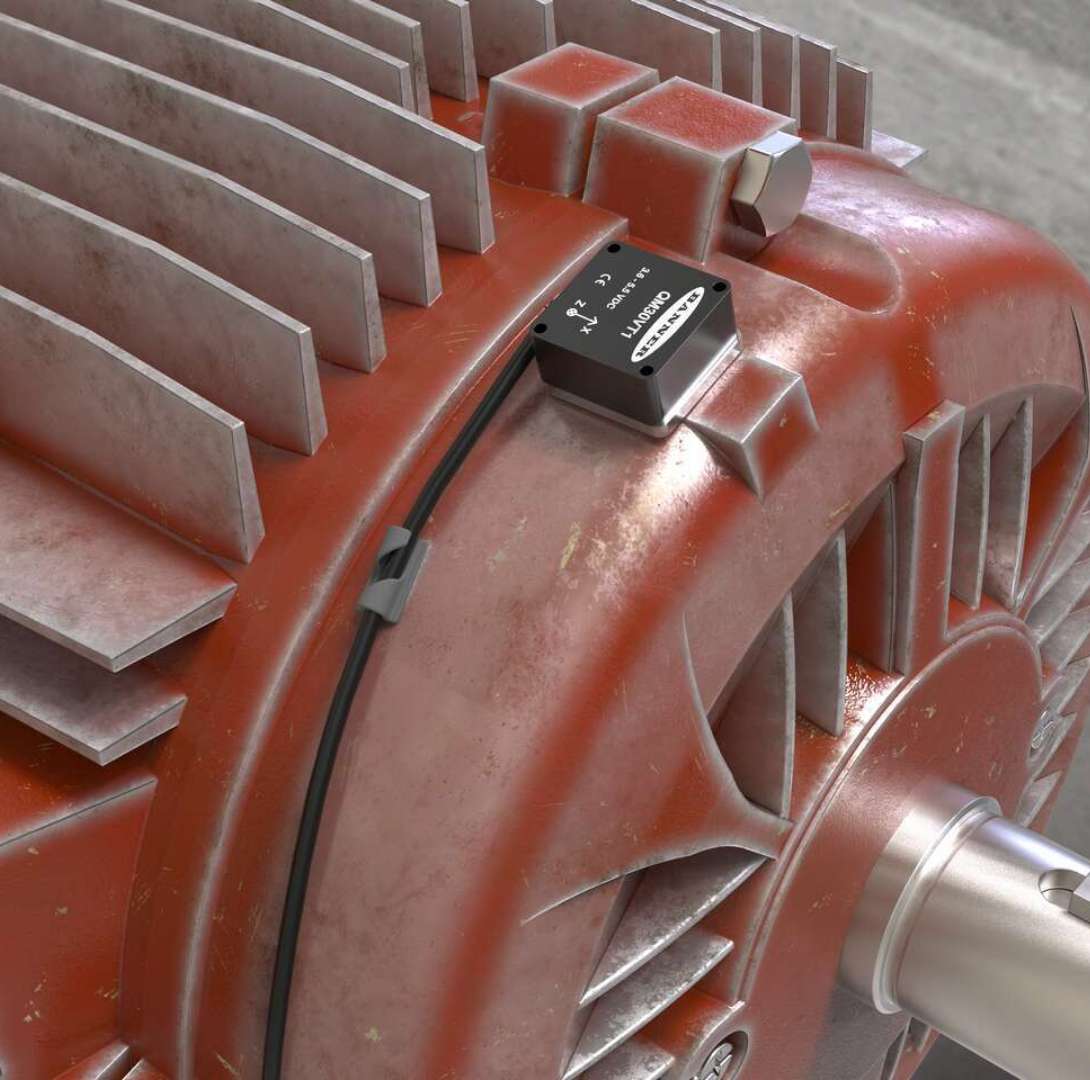
A vibration sensor is a device that measures machine vibration by converting mechanical energy from vibration into an electrical signal. This data (such as speed, acceleration, or temperature) is then used to analyze the machine's condition.
What Are 3-Axis Vibration Sensors?
Provide Complete and Comprehensive Information.
Accurately Diagnosing the Problem.
Better at Detecting Problems in Their Early Stages.
Increase Installation Flexibility.
Product Overview and Key Features.
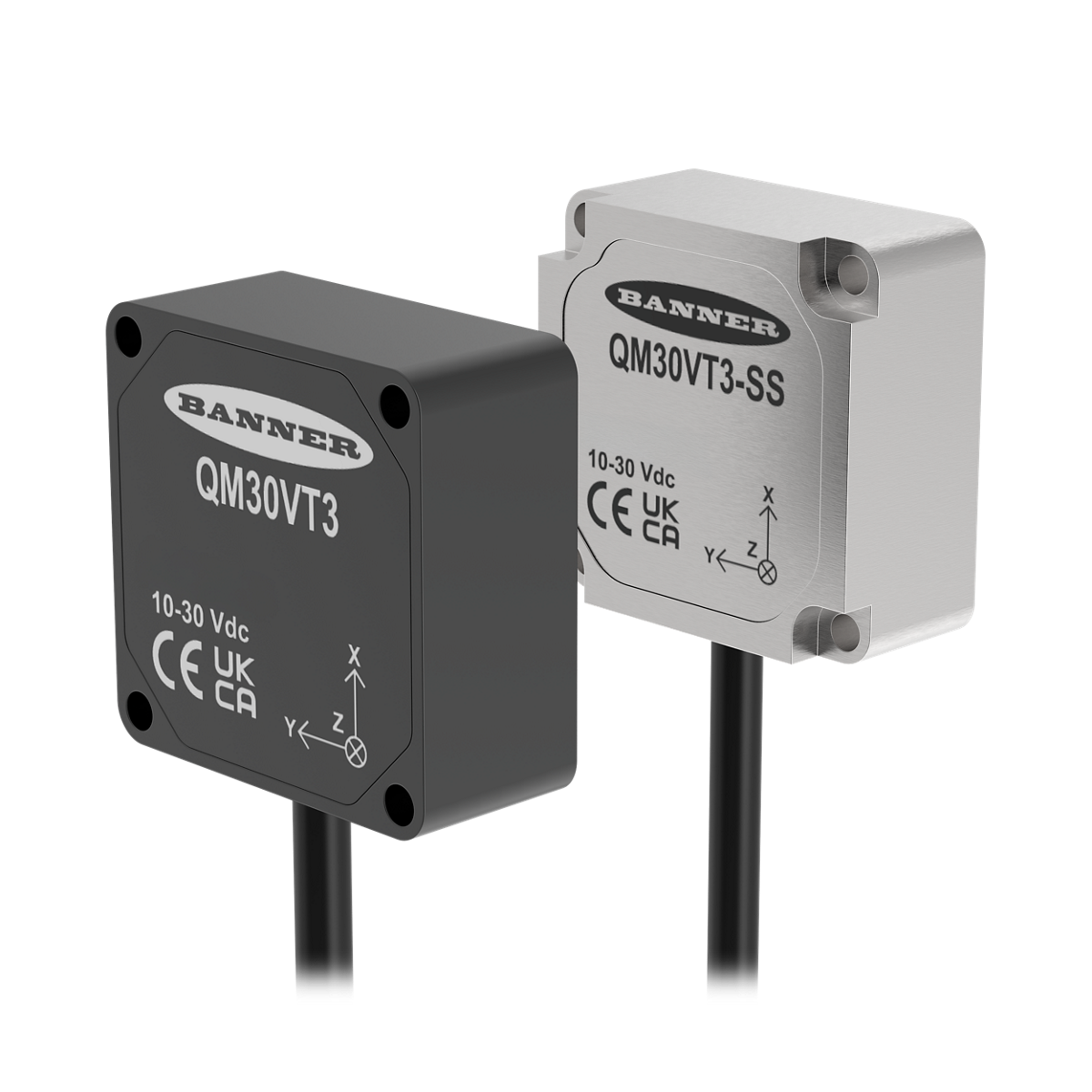
3-Axis (X, Y, Z)
Detection
Onboard Processing (AM)
VIBE-IQ™ Technology
(Built-In AI)
Ultra-Wide Frequency Range
(6–5300 Hz)
High-Speed Data Storage.
Maximum Accuracy with FMax.
HFE (High-Frequency Envelope) Filter
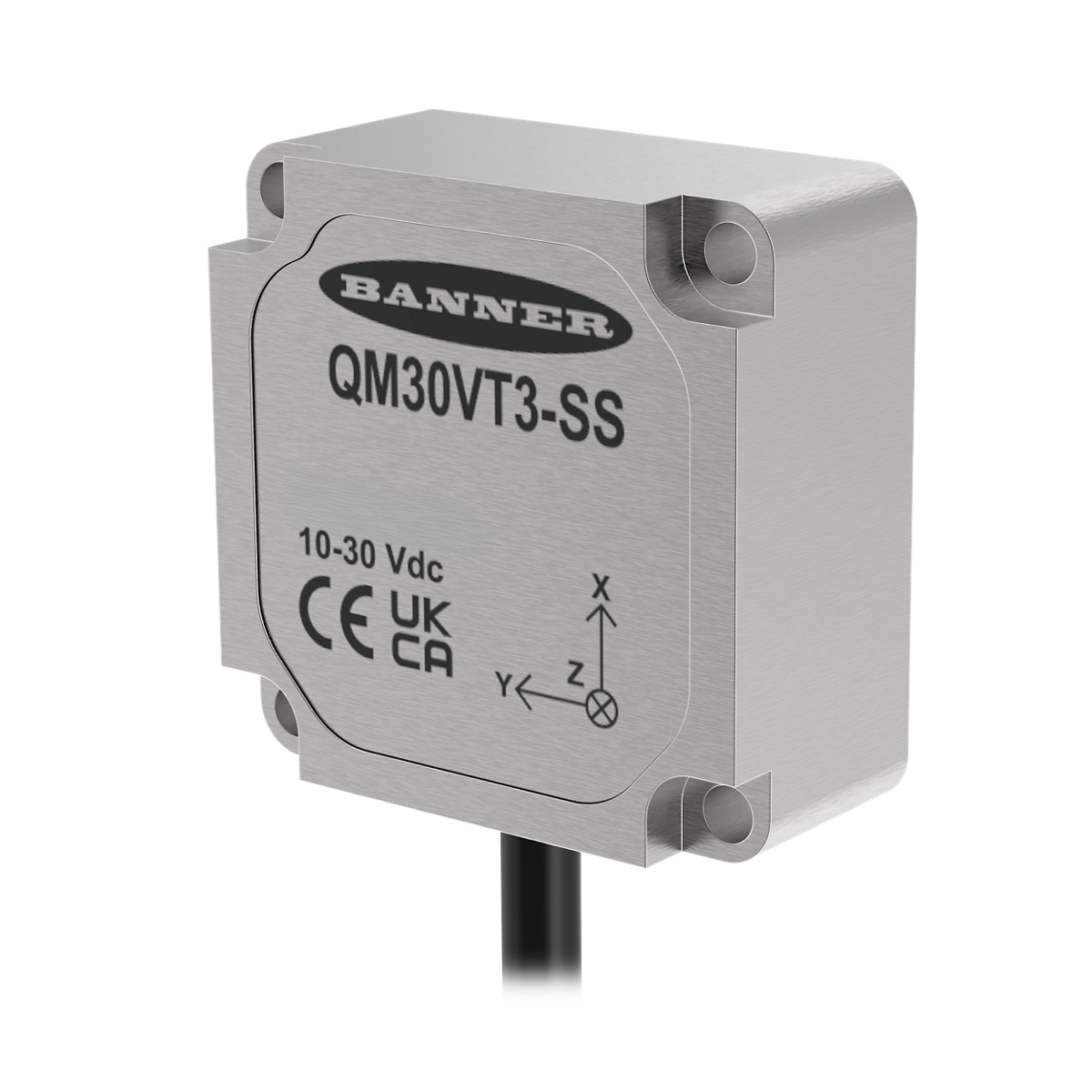
360-Degree Images of Machine Health Revealed.
- Ultra-low noise monitoring: Monitor vibration in all three axes (X, Y, and Z) with incredibly low noise levels, providing more comprehensive machine health data.
- Superior technology: Compared to typical 2-axis or 3-axis MEMS sensors, which often have up to three times more noise in the third axis, Banner sensors deliver consistent performance across all axes.
- Early detection of abnormalities: This accuracy allows for the capture of vibration patterns that indicate serious faults in the initial stages, such as angular misalignment or dynamic imbalance—problems that other sensors might overlook.
- Installation flexibility: No matter how limited the installation space, the sensor can be installed in the optimal orientation for the machine, as the accuracy of 3-Axis Sensing remains unchanged regardless of the mounting orientation.
Wireless Vibration & Temperature Sensor
- Vibration was measured in RMS (Root Mean Square) and Peak Value formats.
- Detect the surface temperature of the machinery simultaneously at a single point.
- Communicate wirelessly via Banner Wireless Gateway to send data to the cloud or SCADA system.
- Durable and resistant to industrial environments with IP67/IP69K standards.
- Operating temperature range: -40°C to +105°C
- Battery life up to 3 years (depending on measurement cycles).
Shaft Imbalance
Misalignment of Parts
Bearing Faults
Wireless Solution for Vibration Monitoring, Powered by a Battery.
Enhance plant-wide machine monitoring with wireless 3-axis vibration sensors (Q45VA3C and Q45VT3 models), delivering reliable performance and seamless connectivity. Key features include over 24 months of battery life, significantly reducing maintenance frequency, and optimized data transmission cycles for energy savings. The devices support MultiHop Gateway connectivity (including the DXM1200), allowing you to collect signals from both wireless and wired sensors under a single gateway.
How Is a Wireless Vibration Sensor Better Than a Conventional One?
| Comparative data | Wired Sensor (General-purpose sensor) | Wireless Sensor |
|---|---|---|
| Installation | It's complicated; it involves laying cable trays, drilling into control cabinets, and takes a long time. | Easy and quick installation. Simply attach the sensor and connect to the network; no wiring required. |
| Total cost | High costs (electrical wiring + labor + equipment). | More economical; reduces labor and material costs for wiring by almost 100%. |
| Flexibility | Relocating is difficult; rewiring is required if the machine moves. | Highly flexible, allowing for immediate relocation, ideal for hard-to-reach areas or rotating machinery. |
| Maintenance | The signal cable may be broken or damaged, susceptible to signal interference. | Durable, industrial-grade design (IP67/IP69K), long-lasting battery. |
| Display | I have to walk over to the control panel or connect it to a complex PLC quite often. | Real-time monitoring: View data instantly via a dashboard on your computer or mobile device. |
Vibration Monitoring from Banner Engineering
Measure Vibration
And Its Frequency.
Collect Data as a Trend
To Detect Anomalies.
Connects
Directly to Banner's Wireless Gateway.
Durable (IP67), Suitable For
Heavy Industrial Environments.
Configuration Examples
can be installed and connected in various ways to suit the structure and size of each factory.
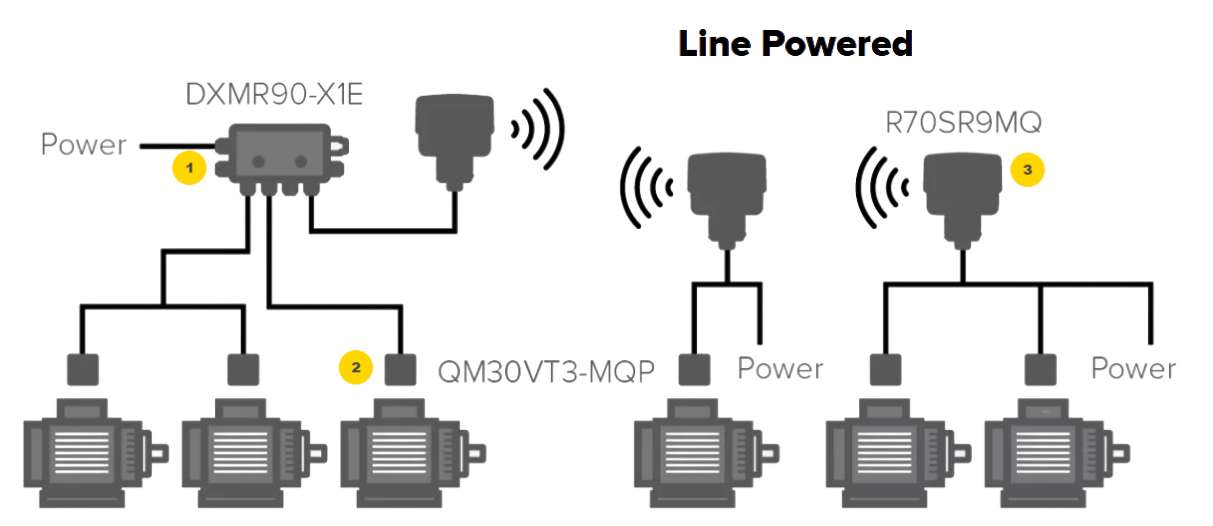
1. Industrial Controller
2. 3-Axis Vibration Sensor
3. Serial Data Radio
The DXMR90-X1E controller collects data from multiple QM30VT3 sensors. Some sensors are directly connected to the controller for power and data transmission via cables, while remote sensors are connected to an R70 Radio Node, which wirelessly transmits data back to the R70 connected to the main controller. This system is suitable for installation in skids, work cells, or asset groups requiring continuous data monitoring, storage, analysis, and real-time display.
Battery Powered
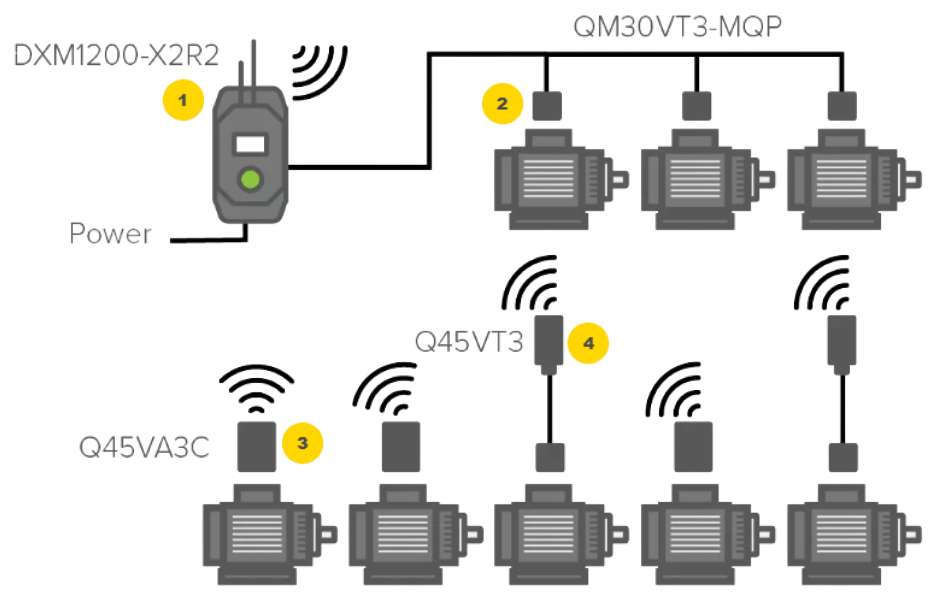
1. IIoT Gateway
2. 3-Axis Vibration Sensor
3. All-In-One Battery-Powered Vibration Sensor and Multihop Radio
4. Battery-Powered Multihop Radio and Tethered Vibration Sensor
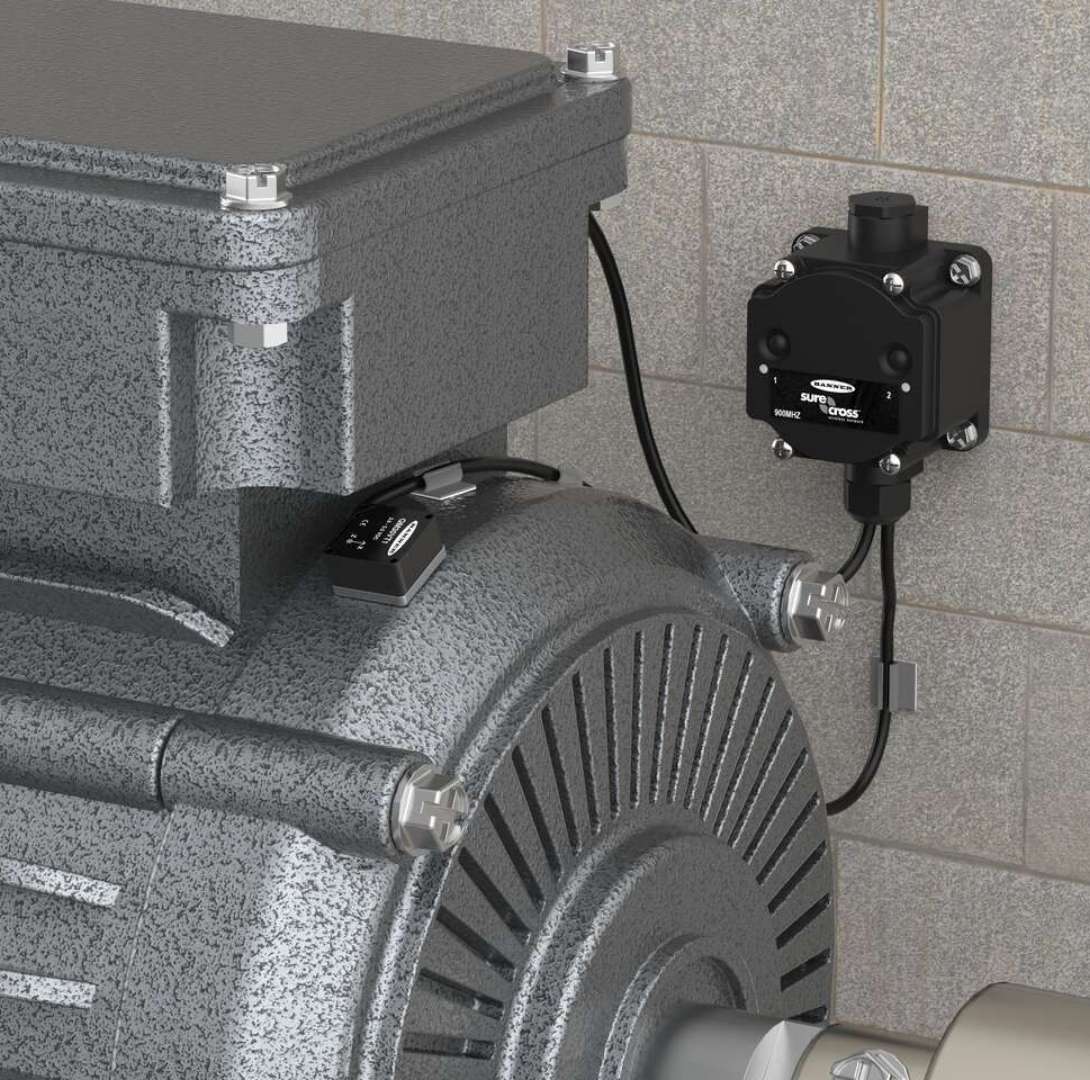
Multiple QM30VT3 vibration sensors, working in conjunction with both the Battery-Powered All-in-One (QM45 Series) and Tethered Sensor + Radio (Q45 Series) devices, transmit data wirelessly via a multihop radio network
to the DXM1200-X2R2 IIoT Gateway, which collects, analyzes, and forwards the data to the main control system.
Working in Conjunction with Predictive Maintenance.
We Recommend the Best Installation Points for the Vibration Sensor to Obtain the Most Accurate Measurements.
Mount Close to Bearings.
Choose a Solid Surface.
Surface Preparation
Consider the Orientation Axis.
Compare the System Before and After Installation.
| list | Pre-installation system characteristics and operation. | After installing QM30VT3. |
|---|---|---|
| Machine inspection | Manual inspection using human labor. | Automatic and real-time monitoring. |
| Downtime | High and unpredictable. | It has decreased significantly. |
| analytical data | No historical data available. | Complete trend data is available. |
| safety | Risk of sudden Machine Breakdown. | Prevention is possible. |

Why Choose Banner Engineering?
- A global leader in Wireless Sensor Network technology.
- The system is durable and can withstand heavy industrial conditions.
- Easy to use, quick to install.
- Supports connection to various control systems.
- We have products and services ready for the Malaysian market.
Start Your Vibration Monitoring System Today.
Frequently Asked Questions About Vibration Monitoring Solution
Vibration monitoring is a system that continuously measures machine vibration using vibration sensors to detect mechanical abnormalities such as worn bearings, loose shafts, or unbalanced motors. When an abnormality is detected, the system provides an immediate alert, reducing downtime and extending machine lifespan.
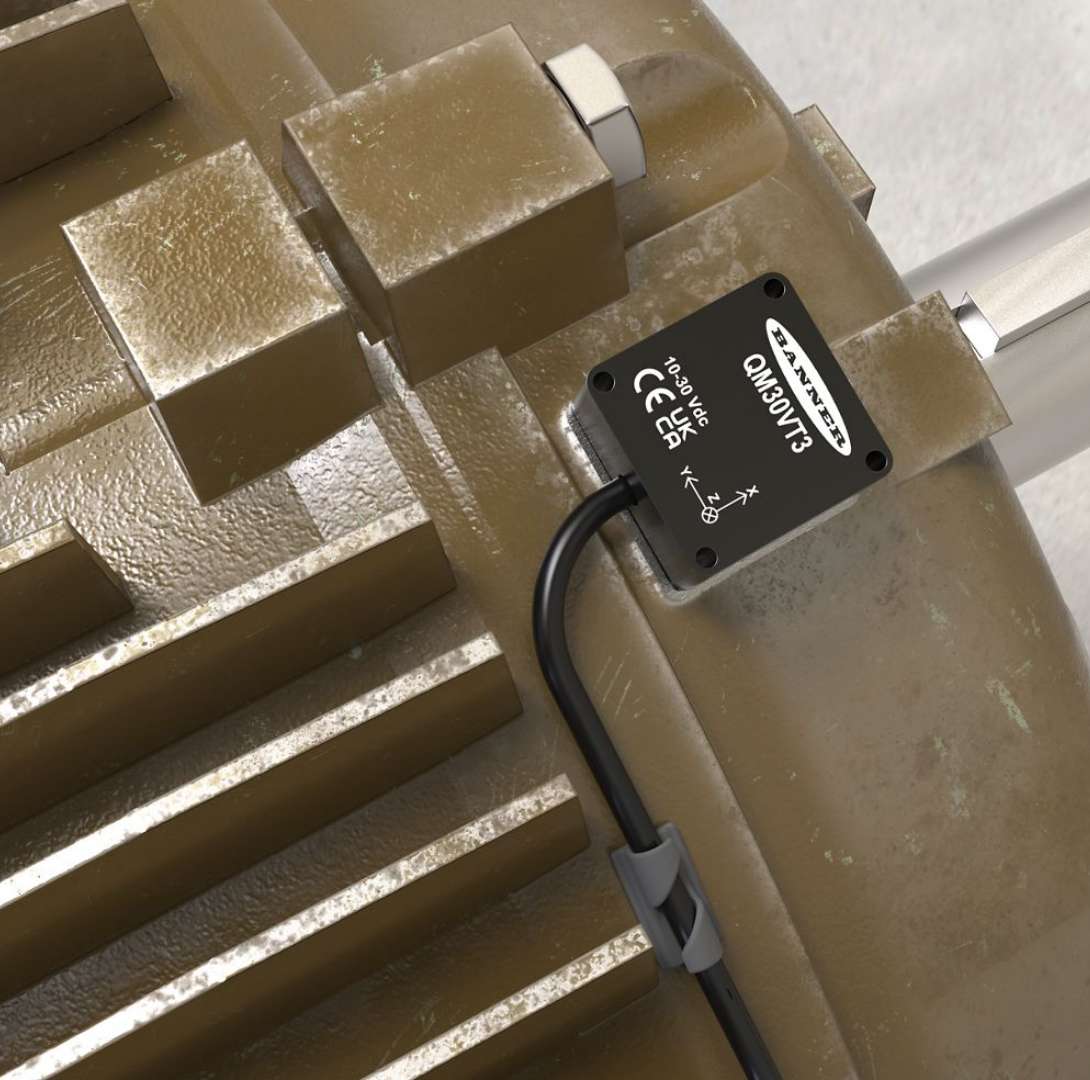
The Banner Engineering QM30VT3 vibration sensor can measure both vibration (RMS/Peak) and temperature of rotating equipment such as motors and pumps. This data is then analyzed for predictive maintenance, allowing for accurate forecasting of wear and tear.
You can choose a system design based on your specific needs. Options include wired systems for fast and detailed data transmission, and wireless systems using wireless vibration sensors for easier installation in locations where wiring is difficult.
It can be connected in various ways.
- Uploading to Banner Cloud Data Services (CDS) for viewing via Dashboard.
- Sending data to the PLC/SCADA system via a gateway.
- Connect to the Predictive Maintenance system in the Smart Factory.
It allows you to integrate data from vibration sensors into a central system comprehensively.
The battery has a maximum lifespan of approximately 3 years, depending on the data transmission frequency (sample rate). Setting the measurement cycle appropriately for the machine will help extend the lifespan of the vibration sensor even further.
The installation is highly flexible. You can choose between a high-power magnetic mount for testing or areas where drilling is impossible, an epoxy adhesive mount for smooth surfaces, or a screw mount for maximum security and optimal high-frequency performance.
Don't worry. Our sensors are protected against water and dust with a high protection rating of IP67 or IP69K (in some models). They can withstand dust, moisture, and washdown in production lines.
Our sensors can be configured to provide alarms according to the international standard ISO 10816 (machine vibration standard), or utilize the built-in Machine Learning function to learn the baseline values of the machine and provide alerts when these values deviate from the baseline.
In general, installing a vibration system is highly cost-effective. Just one sensor that helps prevent a major Machine Breakdown (reducing spare parts costs and opportunity costs in production) makes the entire system investment worthwhile.